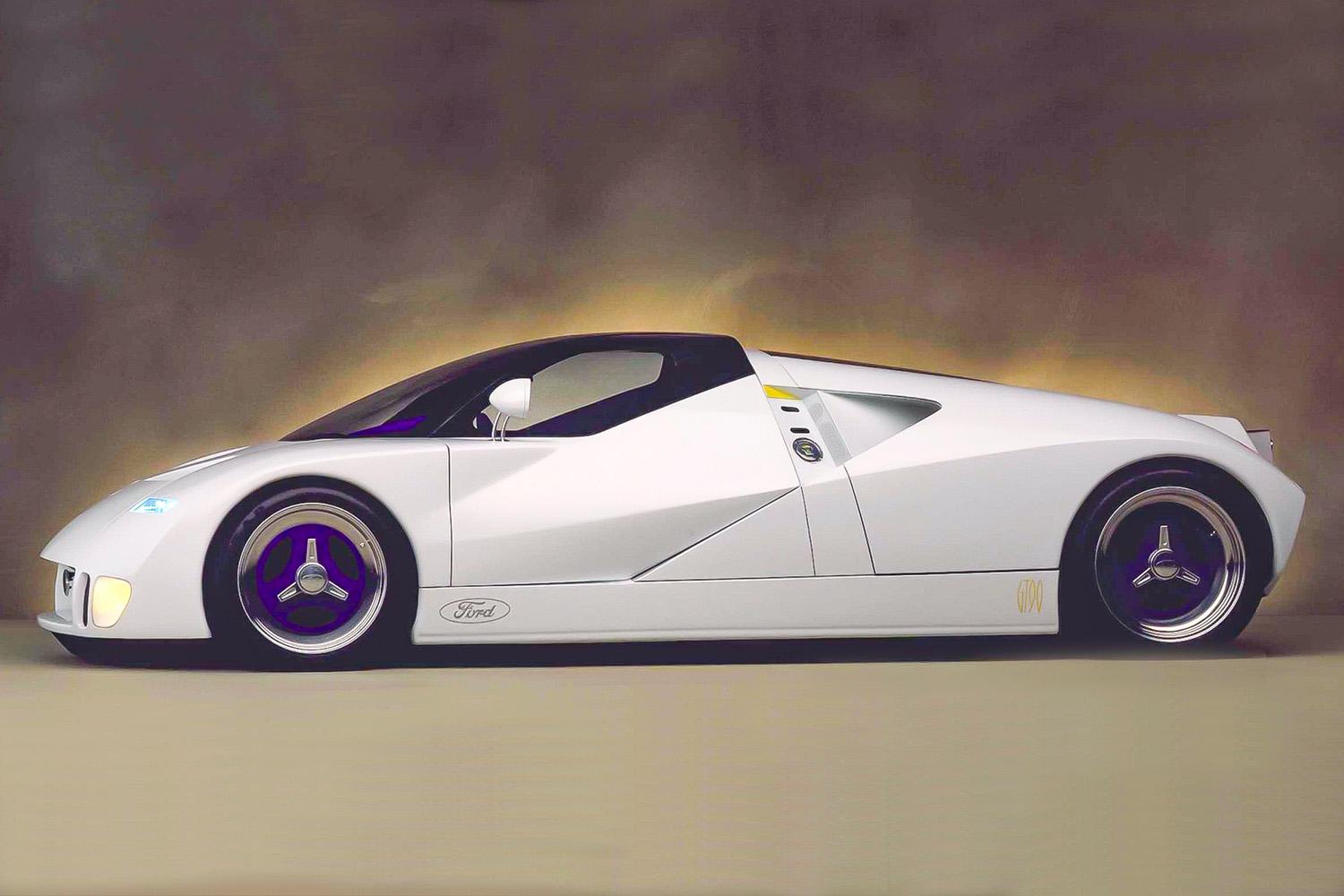
The Ford GT90 was a triangular triumph
The Ford GT90 was every bit as fast as a Bugatti Veyron. Allegedly.
Way, way, way back in a time called the 1960s, there was a lot of racing. People were mad for it, the speed, the grit, the sexiness of it all, and in particular, there was one race that stood out. It is, of course, the 24 Hours of LeMans. The long-standing French endurance race held on a 13 km course, featuring the all-important Mulsanne straight, which in the 1960s was six whole kilometres long. This length meant most competitors could pass the 200 mph mark before having to throw the anchors on and get back to turning.
At this time, Ferrari was doing quite well at LeMans, so naturally, somebody wanted to buy the company. That somebody was Henry Ford II. Ferrari declined, and in a tale as old as time, Hank Deuce decided that Ford would then beat Ferrari at LeMans. And beat Ferrari it did with a 1-2-3 finish in 1966 with the GT40.
Thirty years later, there was a different kind of race afoot. One which emanated from Ferrari and Porsche battling to hit 200 mph in a road car. Ferrari claimed the F40 hit 202mph when everyone had their eyes closed, and that launched us into the 90s, where everyone produced a supercar. However, it was the McLaren F1 that ultimately beat them all to claim the top speed title.
Naturally, Ford again wanted to beat this, so it tipped all its parts bins onto the floor to see what it could find. From the full-scale Lego pile, they pulled a chassis from a Jaguar XJ220, a modular 4.6 V8 from a Crown Victoria and presumably a triangular-shaped drawing board.
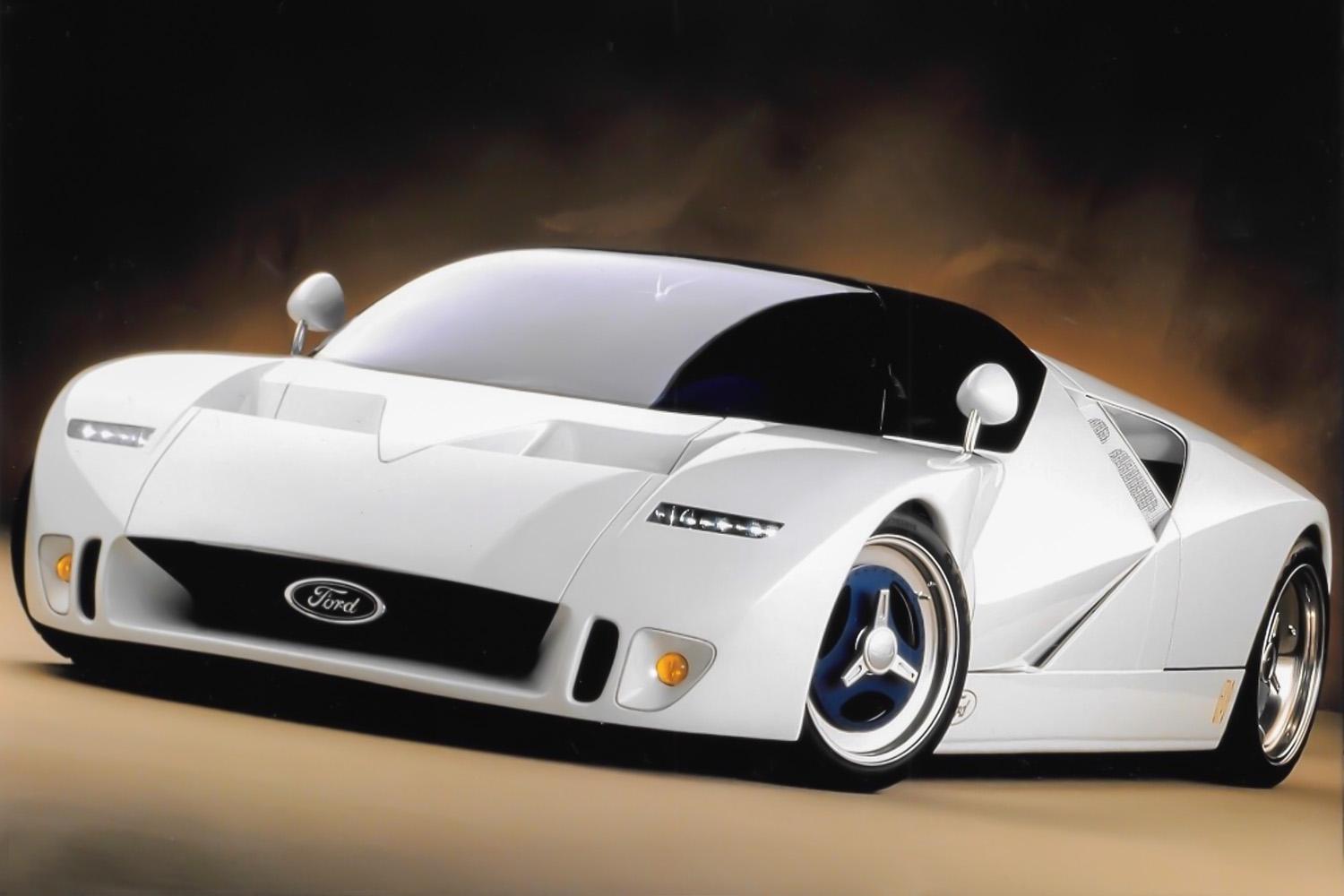
The resulting car was as visually distinct from any Ford product as the GT40 was when it first debuted. Since this was the successor, it would have a GT name. Now, Ford had already made a GT70, but only six were produced, and it looked like a pedalo, so we’ll skip past that. This car was a product of the 90s, so it would be called the GT90.
The goal was speed, and to achieve speed, you need power. So the humble 4.6 went under the knife and returned as a 5.9-litre V12, but this was the 90s, so just like Oasis or Blur, when it came to aspiration, you had a choice between natural or boost. Ford chose boost, and lots of it, thanks to four Garret T2 turbochargers.
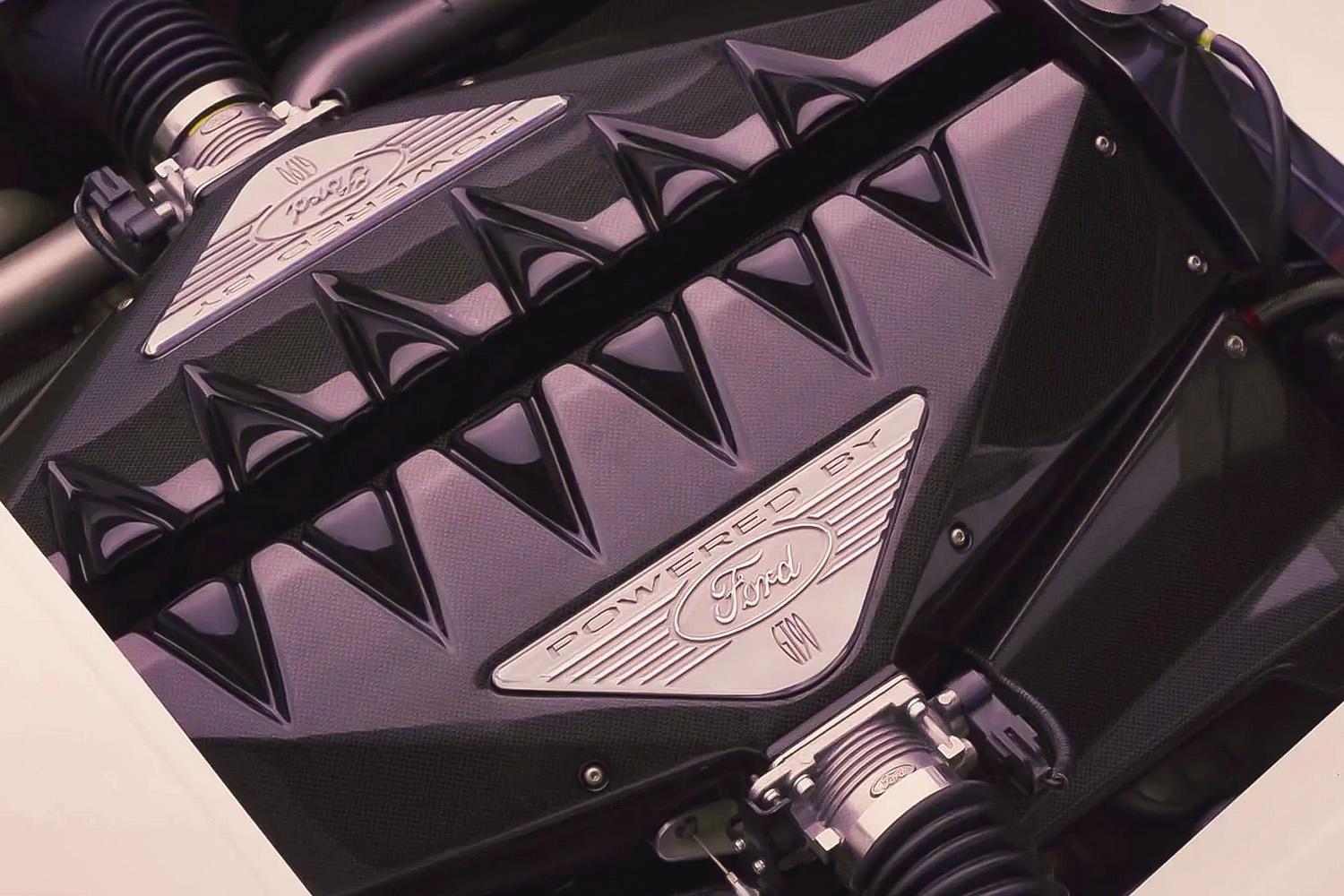
Strapped to the back of this Frankenstein power plant was a five-speed manual developed by Ricardo and FF Developments, who not only gave us the Jensen FF but also a prototype all-wheel-drive Mustang back in the 60s.
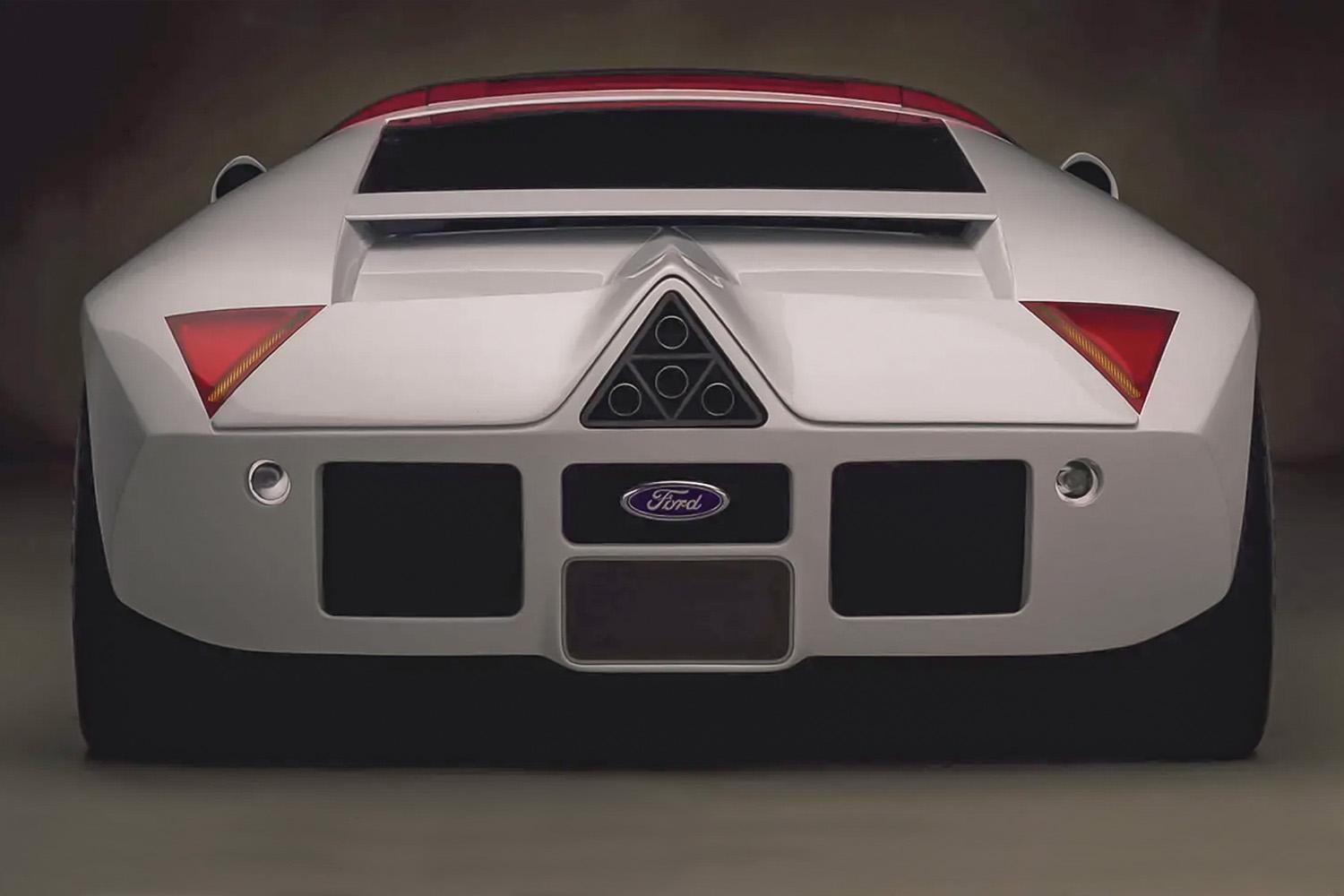
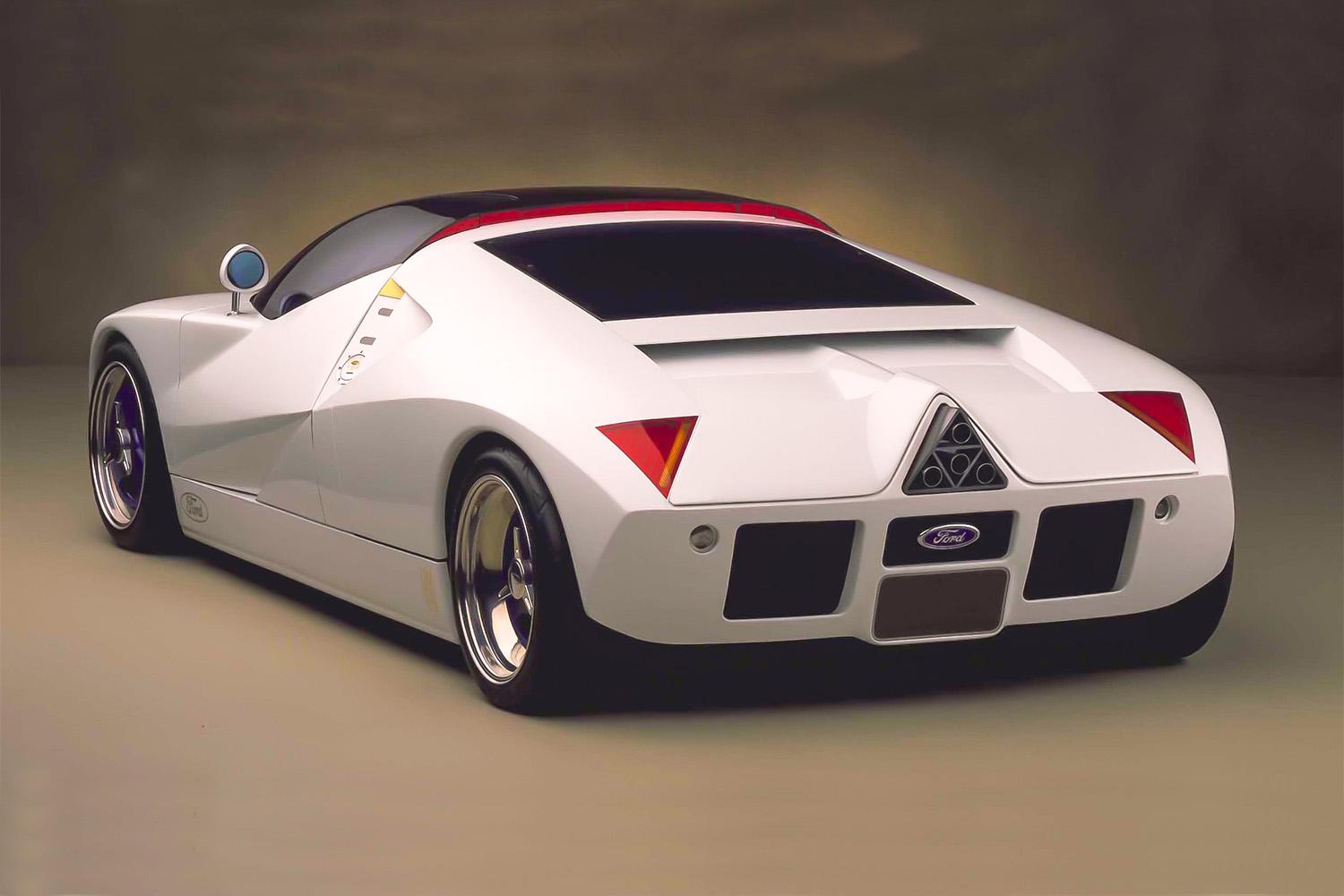
All of this was shrouded in a moulded carbon-fibre body with so many creases and lines it borders on origami. Aside from two oval intakes, later seen on the Ford GT, the design was very triangle-heavy. Everywhere you look, there’s a triangle. The lights, triangles. The intakes, triangles.
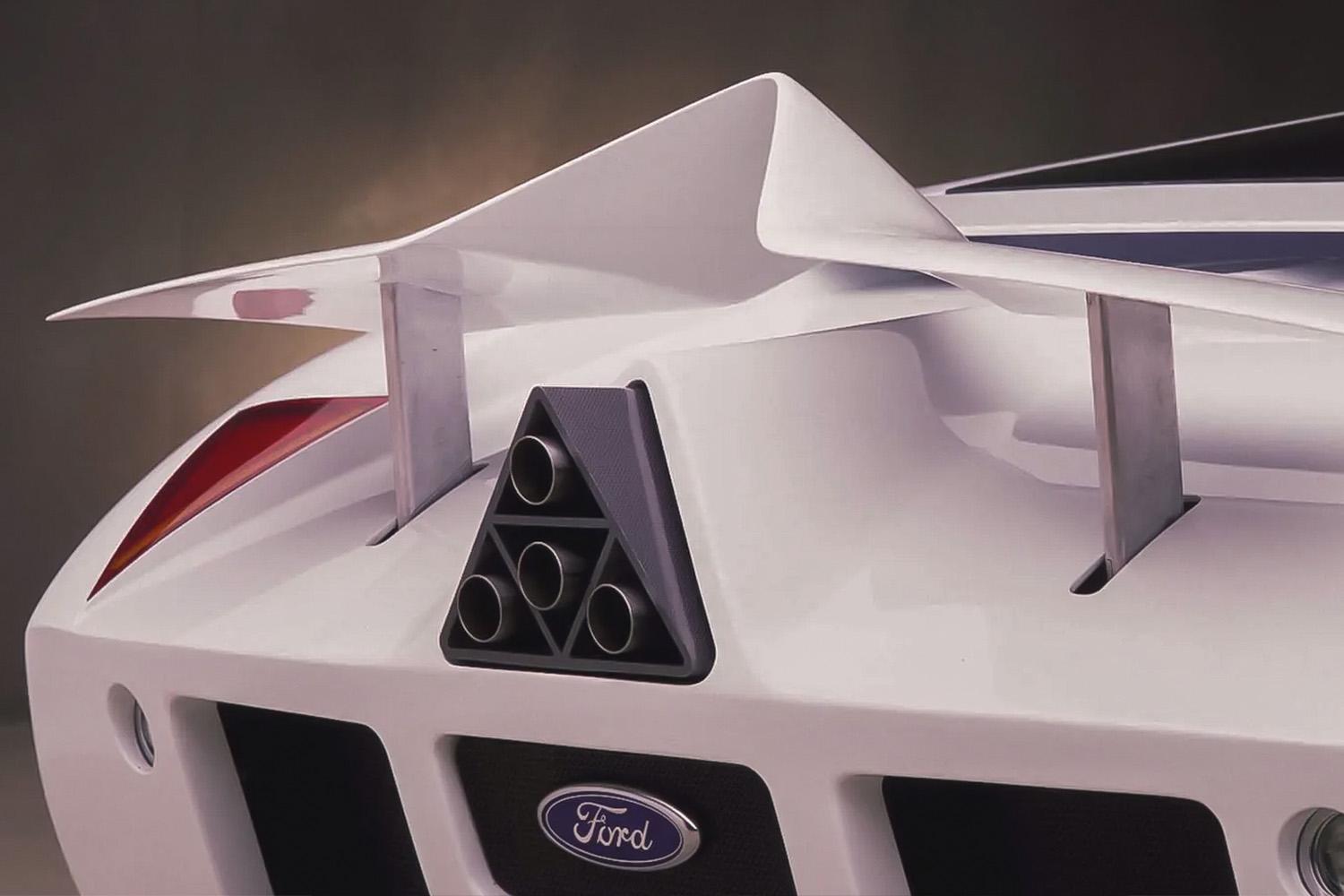
Most notable is the exhaust. Four tips exit through a quadrated triangle atop the rear bumper. Even cooler, however, is that this assembly was actually coated in ceramic tiles similar to those found on the Space Shuttle, designed to prevent the heat from melting the body panels.
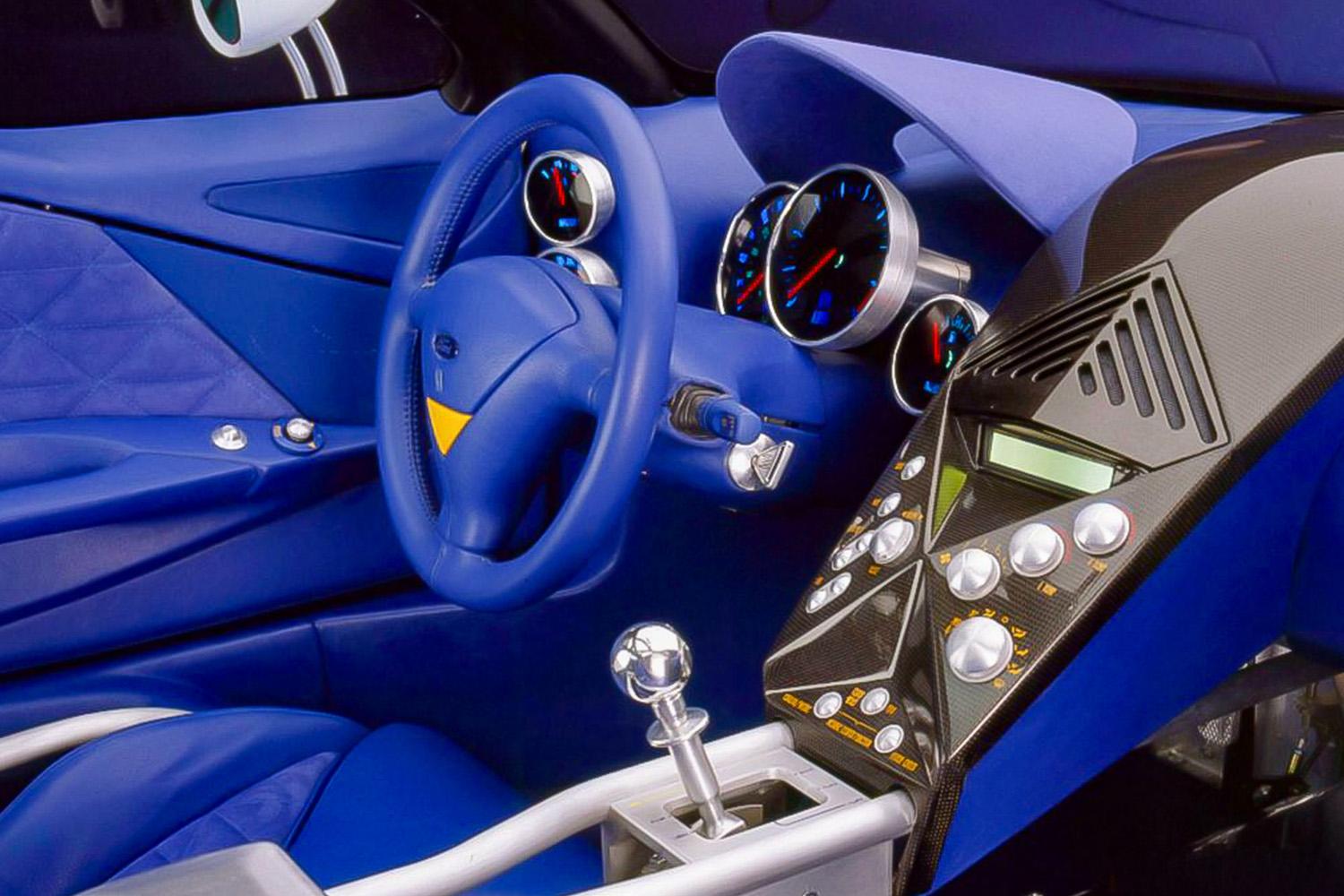
Press the yellow triangle on the side, and the door pops open, allowing you to fold yourself beneath the blue-tinted glass canopy into the blue leather and Alcantara interior. The seats feature the GT90 logo embroidered in a very Art Deco yellow font.
Looking around the sea of blue and aluminium, one of the most standout parts is probably the steering wheel, which resembles that of an early Ford Ka. However, this isn’t the case, as the Ka didn’t launch until a year later.
In fact, it is because the GT90 was intended to unveil Ford’s ‘New Edge’ design language. One that would later appear on the then-new Mustang, Cougar, and Puma models.
Overall, the GT90 looked every bit as fast as those which it sought to defeat, but aside from looks, how did it fare?
Well, the 48 valve V12 put out 720hp, a whole hundred more than the reigning McLaren. The dash to 60 was over in 3.1 seconds, and, avoiding the brakes, you would end up at a supposed 253mph; the same number the Veyron hit nearly a decade later.
I say supposed because that’s what Ford claims, but try to find any public evidence of this, and you’ll come up short. Even when the car was loaned to a then afro-sporting Jeremy Clarkson, the turbos were disconnected, giving the vehicle only 400 hp and as Clarkson put it, “a top speed of 40”.
Ultimately, the project was shelved; the reasons for this varied. Perhaps it was the proximity to the Ford GT, which we saw just a few years later, or maybe it was the difficulty in getting the car to perform as expected.
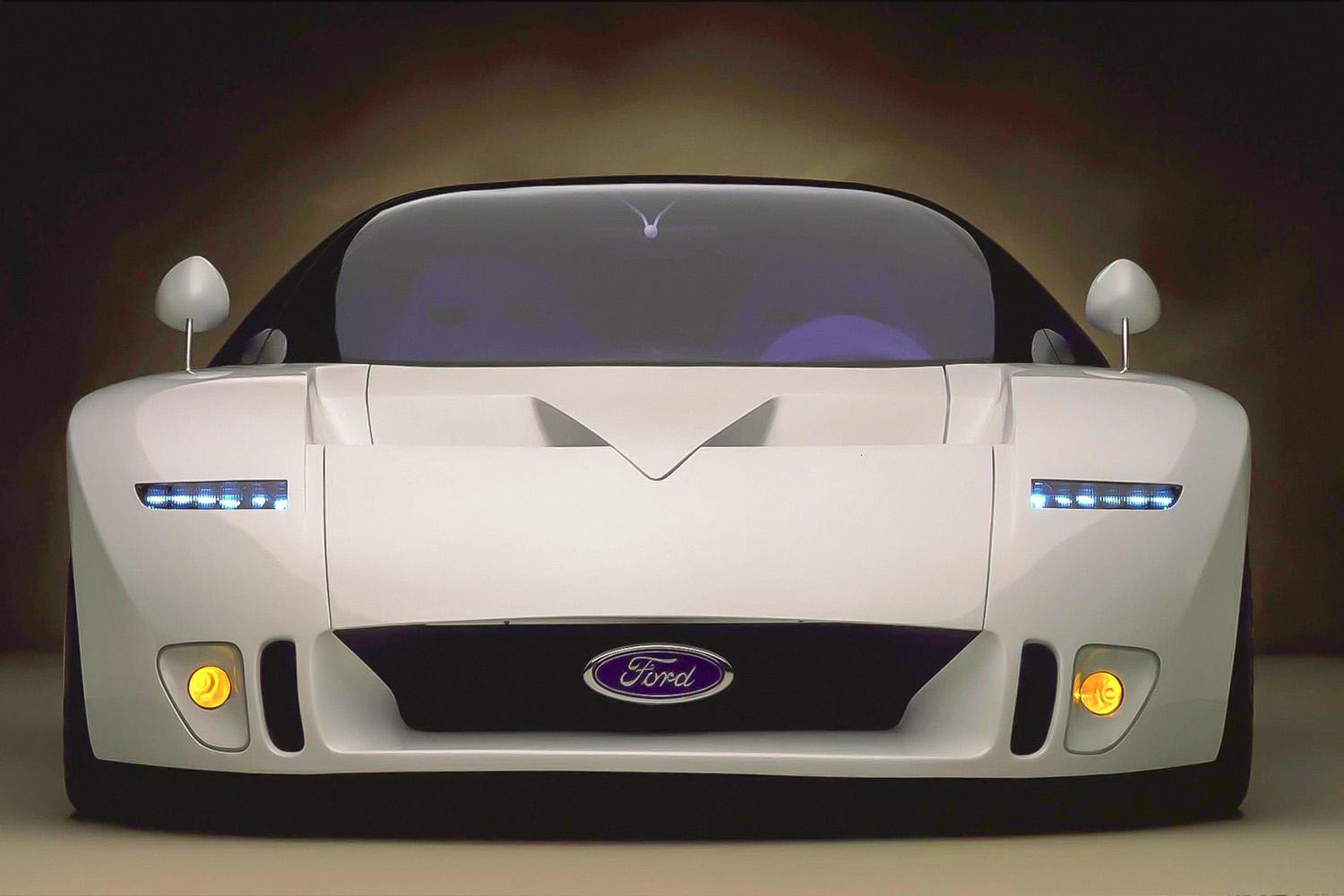
At the time, Ford claimed the car was only ever intended to be a design study. Just look at the tyres, which featured GT90 script as part of the thread pattern, and this starts to seem plausible; however, this contradicts earlier statements by the company.
As with most concepts, there is only one, and in a theme that seems to be common among American manufacturers, it is no longer owned by Ford. Having spent a stint on show in the Peterson Automotive museum, you can now find it on display at the Hajek Motorsport Museum in Ames, Oklahoma.