The Ford Indigo was a race car for the road
The Ford Indigo was powered by a V12 that went on to feature in the Aston Martin DB7.
Looking at Detroit’s ‘Big Three’ in the 1990s, it would be easy to believe that the good folk at Ford might have been looking across the schoolyard with envy as Chrysler and GM both paraded around in working-class super-cars, when all Ford could bring to the party was an ageing Mustang.
All is not as it may seem, however, because while the Viper and the Corvette battled it out on the showroom floors, Ford held focus elsewhere. Namely two things: advancing one of the best-selling vehicles of all time – the F-150, and competing in motorsports.
In the 1990s, Ford, along with its engine-making pals over at Cosworth, was busy competing in and supplying powertrains to IndyCar, the American open-wheel racing series. The engine in use at this time was known as the Ford-Cosworth XB, and it was quite successful. Even professional moustache-wearer Nigel Mansell won five races with an XB in 1993.
Having already showcased its upcoming ‘New-Edge’ design language in 1995 with the GT90 Concept (more on that later), Ford wanted a real showstopper for 1996, one with emphasis on the company’s IndyCar prowess.
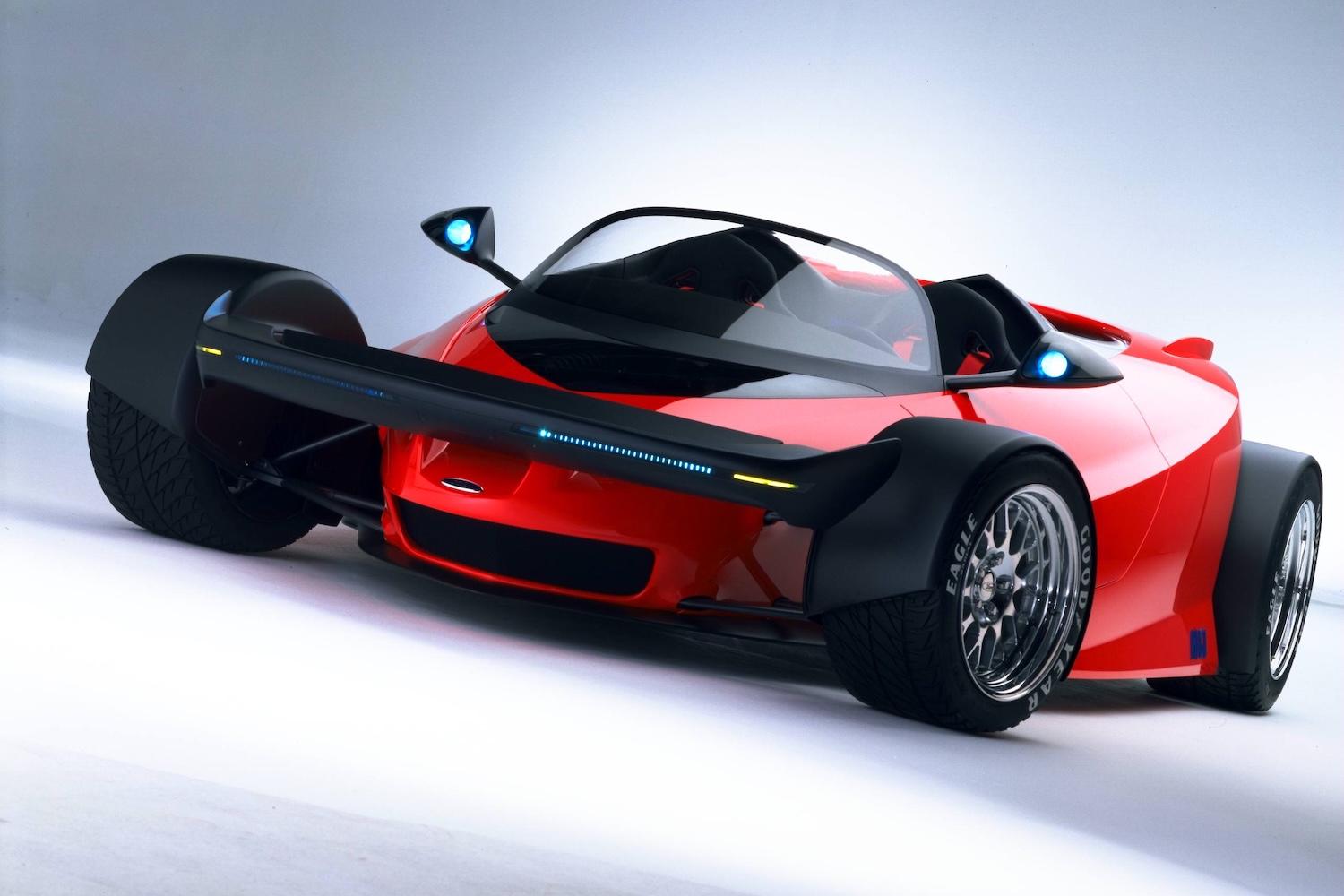
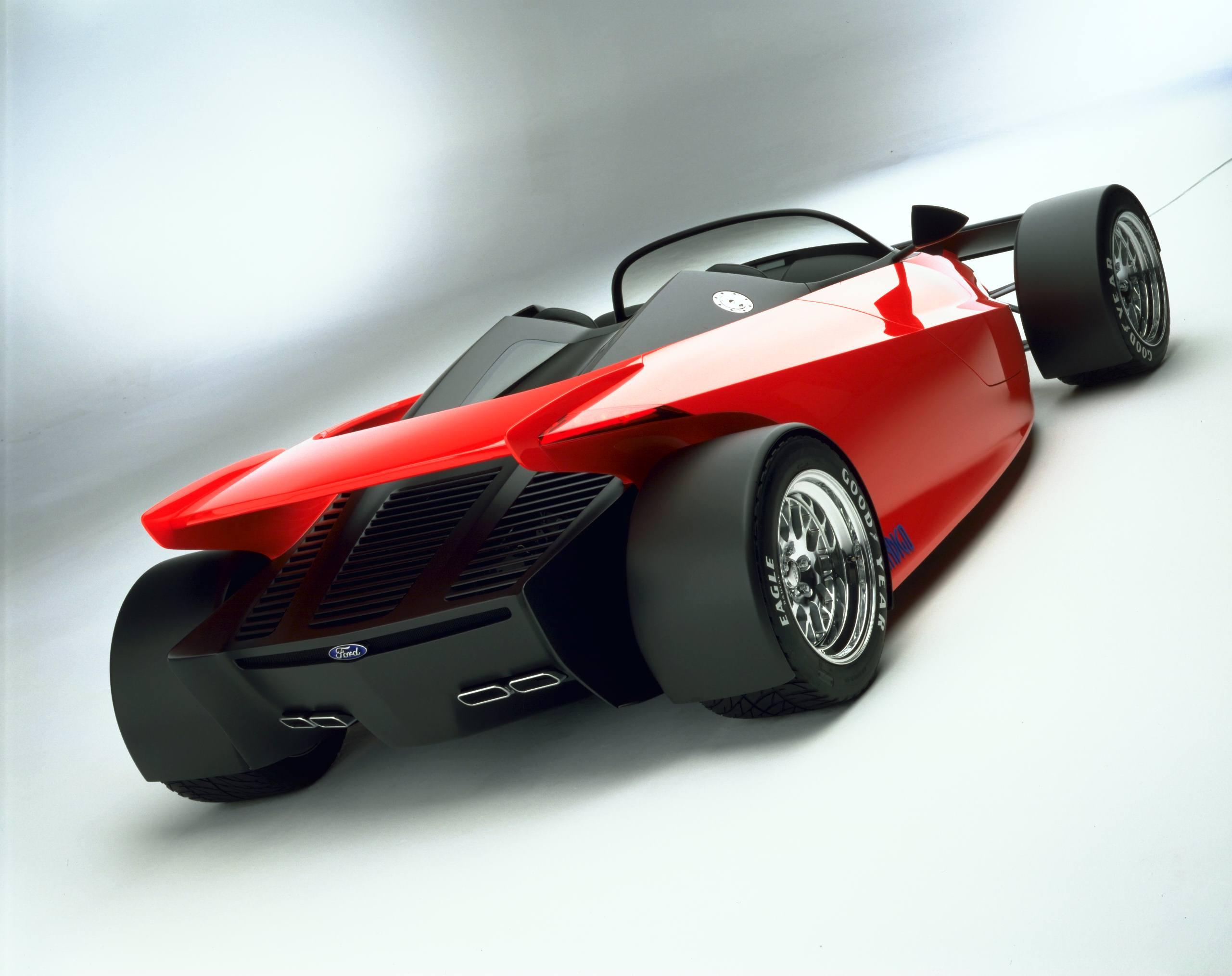
The result was the Ford Indigo, and despite the name, it’s red. It also has lots of exposed carbon, something that, while mainstream now, was often hidden beneath paintwork in the mid-90s.
The carbon wasn’t just for show, either; it was built to be an impression of a road-going IndyCar. The entire tub was a single-piece honeycomb carbon fibre unit. Construction of the tub was overseen by Reynard Motorsports, and the whole thing was brought from design to completion in just six months.
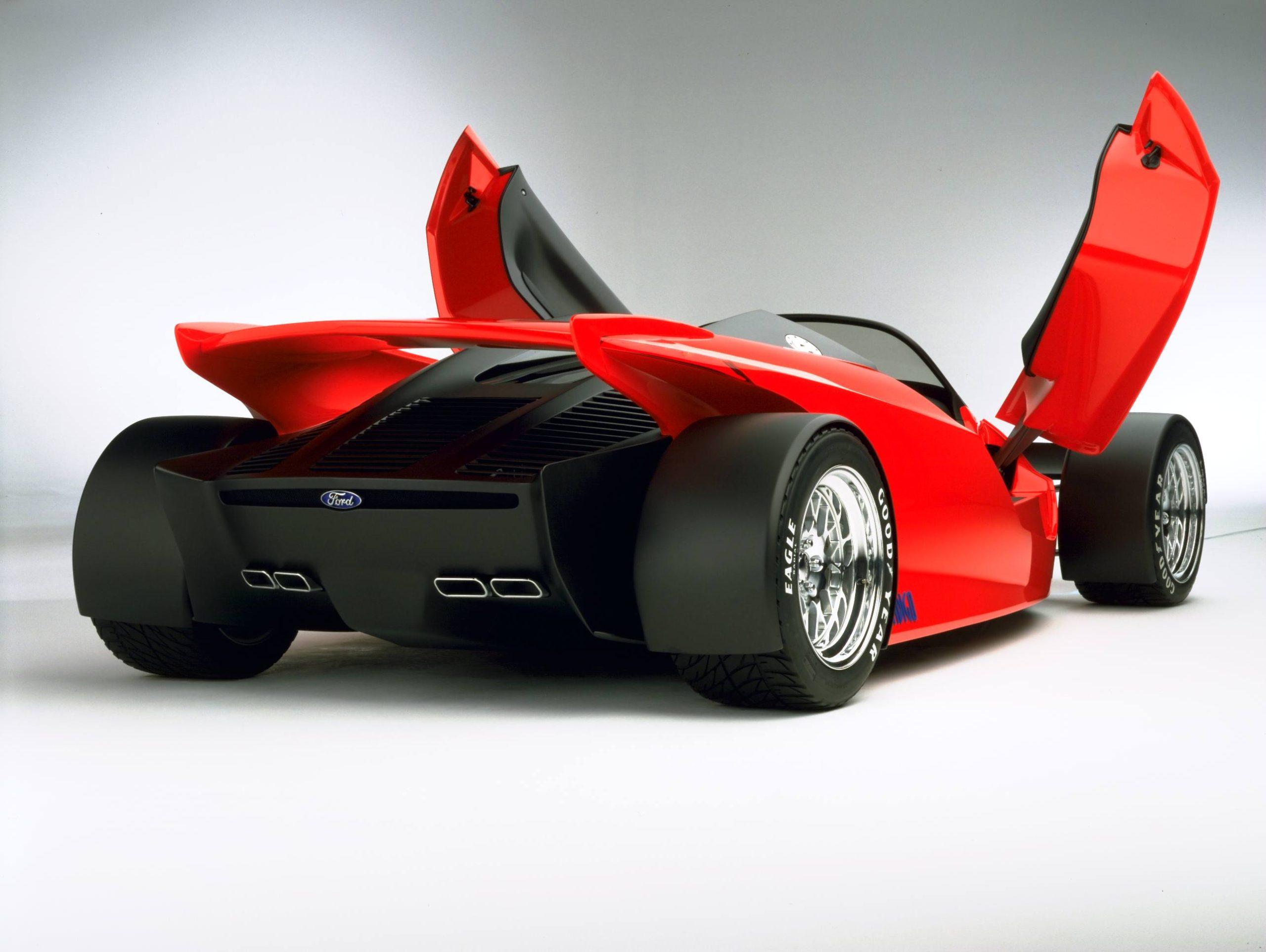
Bolted directly to the chassis sat a 6.0-litre V12, curiously one of a different make up to the aforementioned GT90 of the previous year. Ford dubbed it a ‘Quad Cam, 48 Valve’ motor, trying to disguise the fact that it was two Taurus V6 engines and a healthy dose of glue. The glue held, however, because you may know this engine from its later use in the facelift Aston Martin DB7 and onwards.
The task of transferring the 430-odd horsepower to the road was given to a set of 18×12.5-inch Fiske wheels, and a 6-speed transaxle with a manual clutch and steering wheel-mounted push-button controls developed again by Reynard for use in IndyCar.
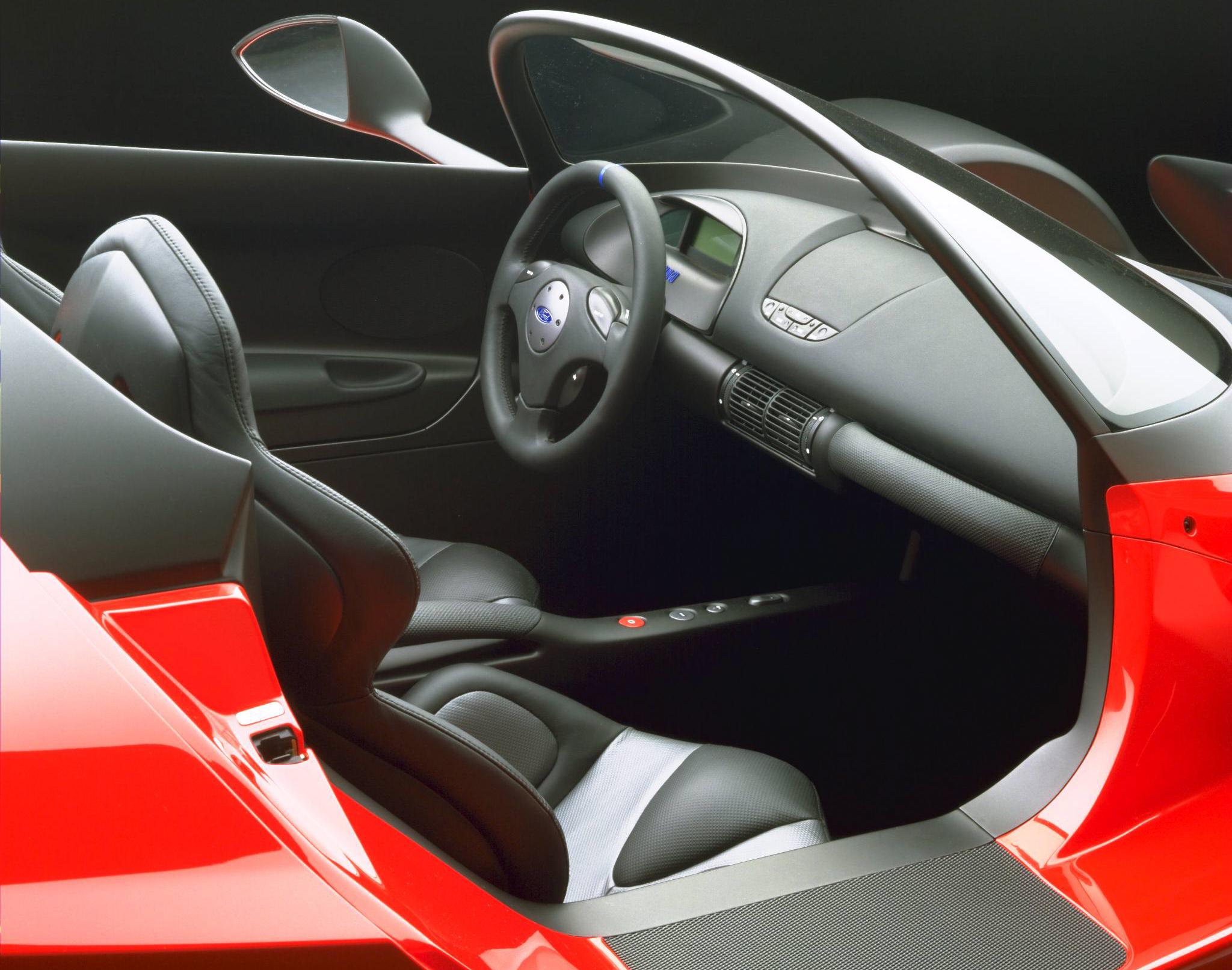
While this gave the Indigo a theoretical top speed of 180mph, more curiously, Ford claimed this setup was so efficient it would allow the car to achieve 34 miles to a single gallon of our Euro spec petrol.
While glue and MPG are all very interesting, let’s talk about the real reason the Indigo was a showstopper: the bodywork. Mainly constructed of carbon fibre and fibreglass, with a little sprinkling of Nomex, the exterior panels were designed to be as sleek as could be. This even extended to the lighting.
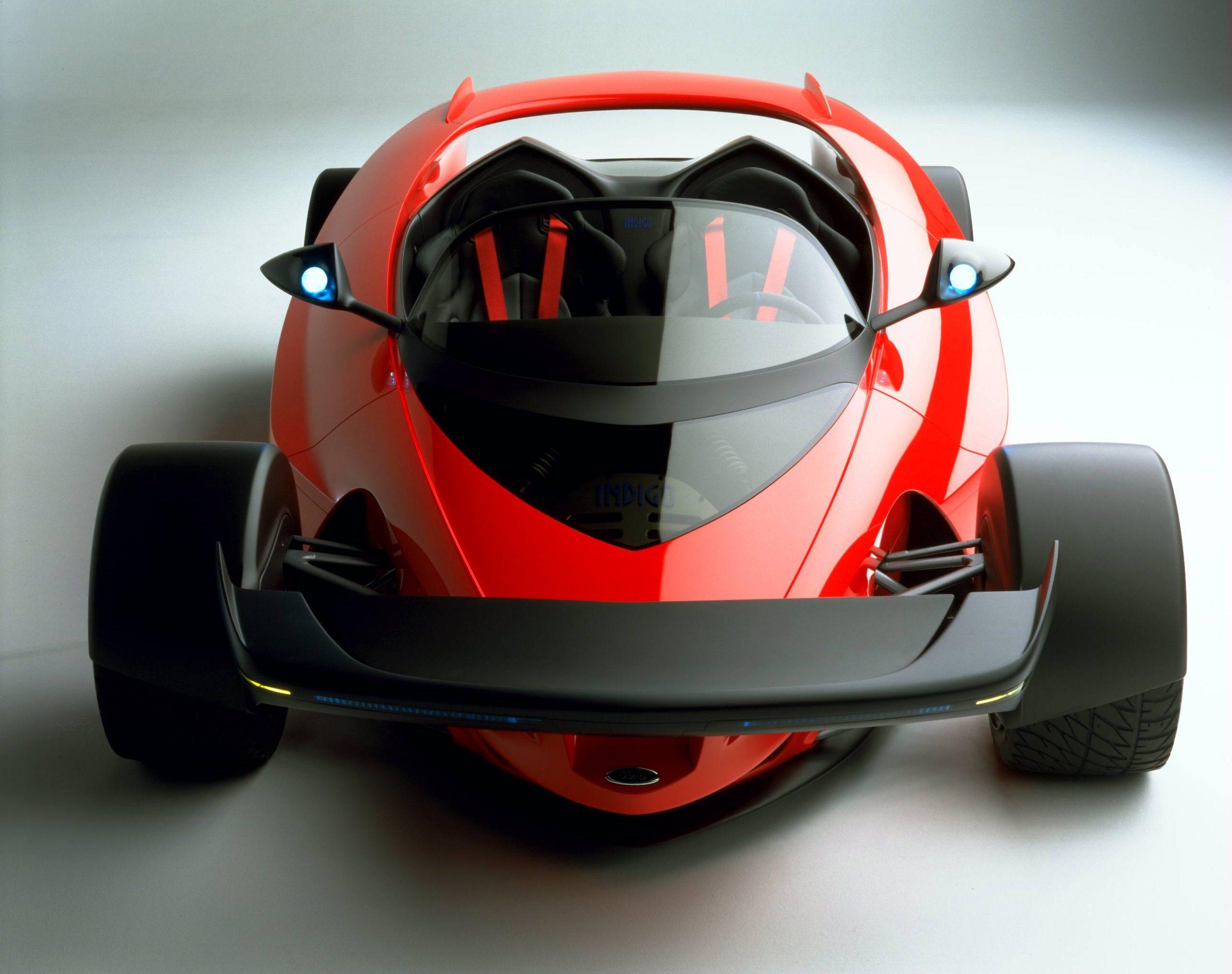
Because this was intended to be a road-going example, the Indigo couldn’t just get away with its little Robocop-looking lighting strips housed in its front spoiler. Look closer and you’ll notice the forward-facing surfaces of the side mirrors are actually projector headlight units.
This design language is much the same at the rear, too. Hidden in the sweeping lines rising to the rear wing are the taillights, which from some angles have a hint of Ford Cougar to them.
Ultimately, Ford only built one working example of the Indigo and either one or two rolling show cars, depending on which source you believe. The working car was sold to tuner Jack Roush, who had a hand in developing the prototype, and that car is still housed in his museum, free to view if ever you find yourself in Livonia, Michigan, with a penchant for race-inspired concepts.
How much is a Ford Indigo?
Over the years, little has been seen of the non-functioning car(s). A Christie’s auction featured a non-running Indigo with a guide price of $15,000 to $25,000; in the end, the car hammered at a hair over $88,000.
In 2019, a Facebook marketplace listing showed either that same car or the rumoured second car for sale with an asking price of $195,000; however, this is not only the internet, but Facebook, so apply salt in pinches where necessary.