
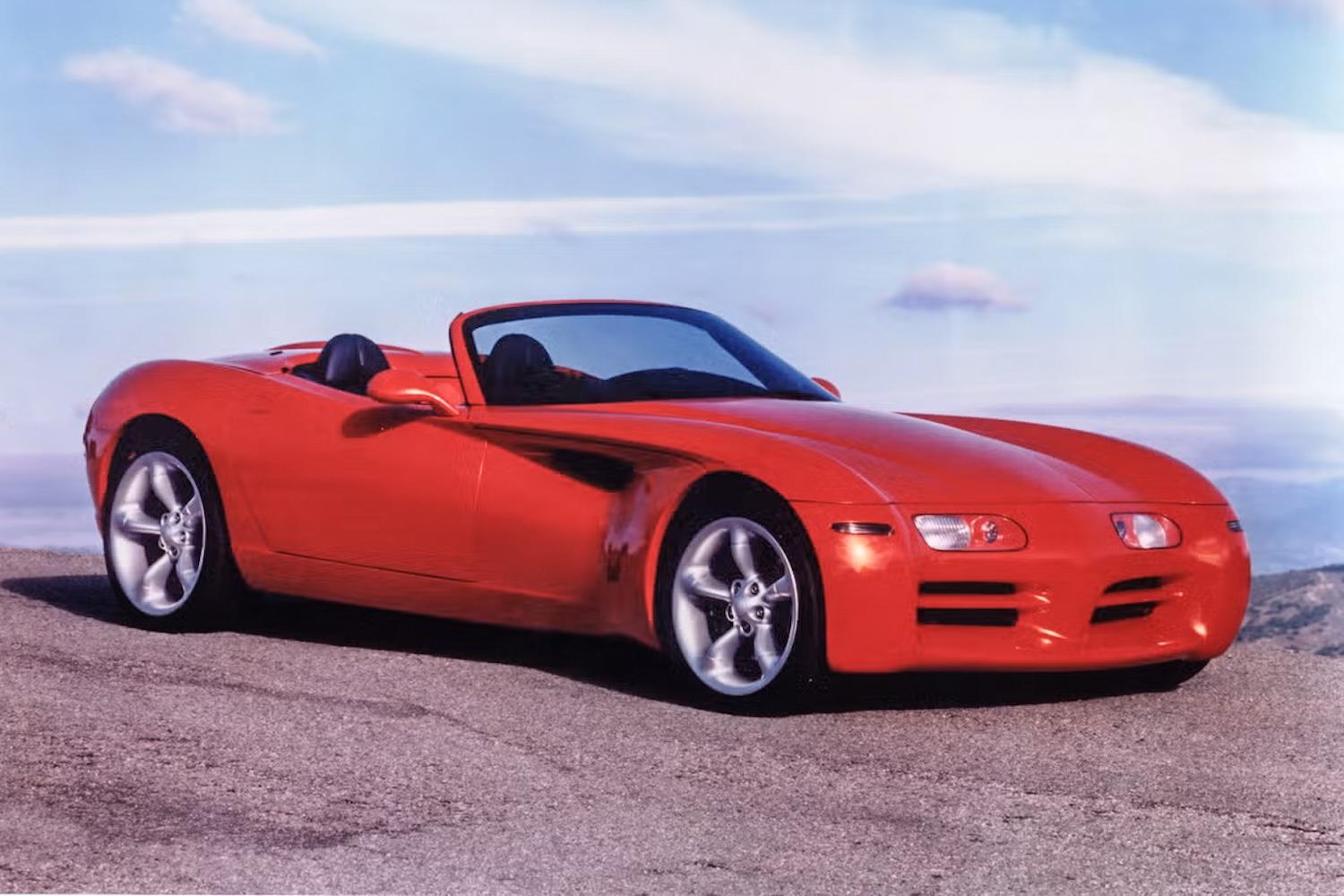
We didn’t deserve the Dodge Copperhead
The Dodge Copperhead could have been a better, more affordable Viper, but Chrysler and ZZ Top had other ideas.
Perhaps it’s the concept you grew up with, or perhaps it’s the fact that in the late 90s and early 00s, it seemed like the Dodge Copperhead was everywhere, a car that was well known yet didn’t actually exist.
From its appearance in Gran Turismo to a die-cast model in just about every scale available courtesy of Maisto, the bright orange roadster is one of the most recognisable concept cars of its era, so what was it and why doesn’t it exist?
Unveiled in 1997, the Dodge Copperhead was set to be a baby brother to the powerhouse that was the Viper. Sales of the Viper were doing well. However, by that point, prices were in the $70 thousand range, so Dodge wanted to explore the idea of a car that focused less on raw performance and more on handling and feel, which could be offered in the $30 thousand range.
The resulting experiment used a modified Viper chassis but pushed the wheels right out to the extremities, giving it a minuscule overhang, but also a wide track. Looking at the Copperhead and the badge on the front, you might automatically assume it would slot nicely under the Viper with a large Mopar V8 under its never-ending hood, but you would be wrong; it actually got a 2.7-litre DOHC V6 from the upcoming Intrepid.
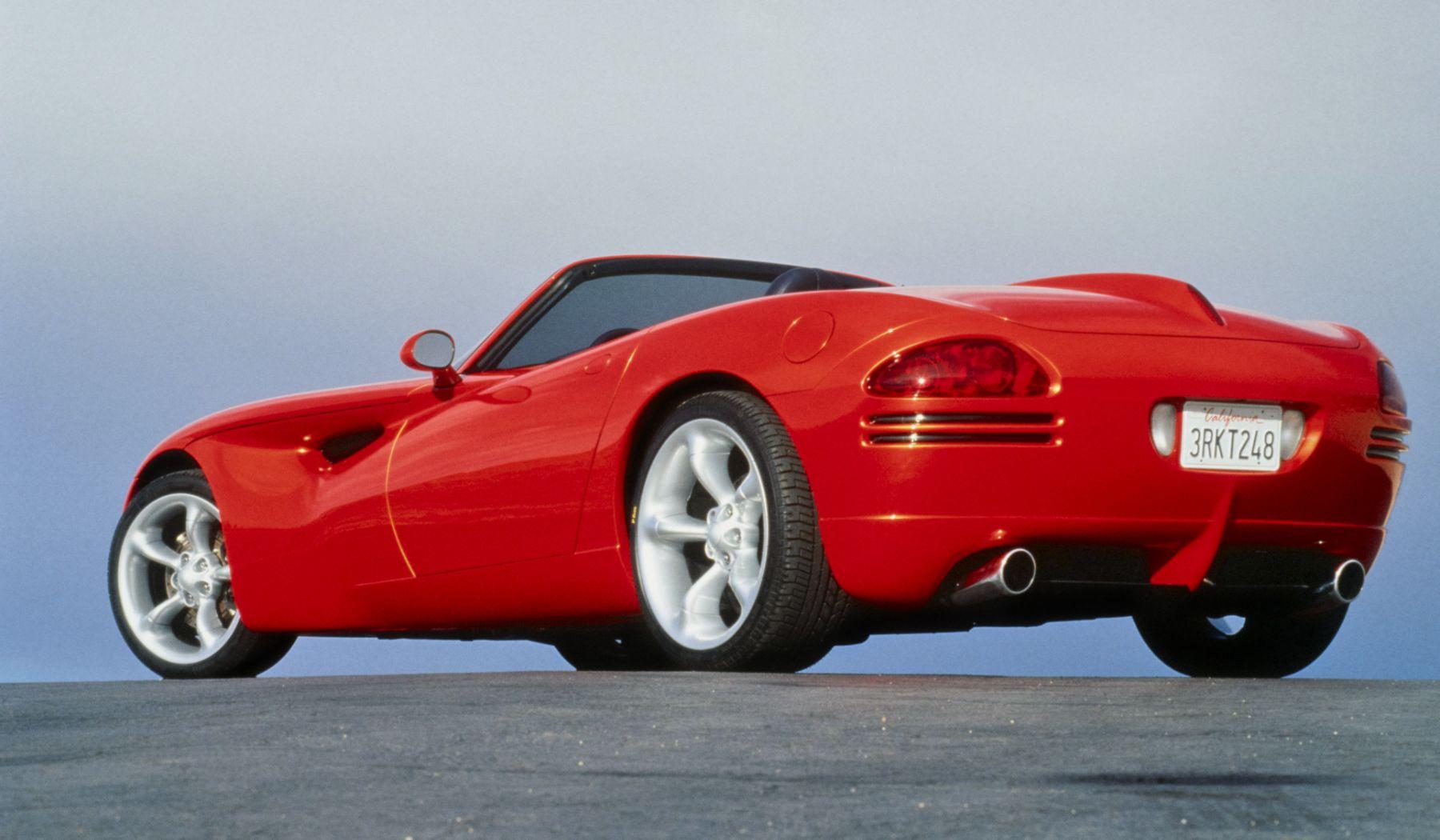
You see, looks can be deceiving, and the first-generation Viper is quite small in person compared to how it photographs, so naturally, a car based on its chassis would follow similar proportions.
Where it differs is a higher ride height and the far taller and curvier bodywork. Compared to the Viper, the side lines of the Copperhead rose towards the rear, giving it a raked look, and it featured larger taillights, two design cues that were later seen in the 2003 Viper.

Up front was the unmistakable Dodge crosshair grille moulded into the lower bumper as an air dam, and above that its beady little headlight eyes, a feature that has almost always looked out of place on a car with such curvature, however the squished front end did help in one way, it gave the Copperhead aggression, as if it had reared its haunches ready to pounce.
Also helping to blur its proportions were the wheels, a whole 18 inches, huge for the time period and larger than the car it was based on, too. Couple the large wheels with the five-speed manual gearbox and double wishbone coil-over suspension, and you start to wonder what went wrong.
ZZ Top killed the radio star
Well, firstly, I’ve referred to it as the Dodge Copperhead throughout, and I’d be willing to bet at least one of you reading this has said, “Is that what it was called?”. Initially, it was called the Copperhead, but beard and car enthusiast Billy Gibbons, singer and guitarist for ZZ Top, put a stop to that.
He owned a custom Ford named Kopperhead and politely informed Dodge of this. Dodge, not wanting the fight, decided to hastily and somewhat half-heartedly give it the name you may be more familiar with, the Dodge Concept Car.
Okay, so Rock Santa Claus didn’t like the name. Is that why it never made production? The reality is a far less cool rationale. Chrysler Corporation already had a V6 hot rod styled roadster in the very purple shape of the Plymouth Prowler, and the fear was that Dodge’s offering might overshadow it, despite all the Prowler owners who love their car so much they insist on towing another half Prowler behind it.


Not only that, but the upcoming merger between Chrysler and Mercedes-Benz meant the SLK would also be at risk of having its lunch money taken. Combine that with the turn of the millennium taste for SUVs, and suddenly, a concept that not only had a running and driving show car, but had made it as far as planned mass production was unceremoniously shelved.

Ultimately, life is all the worse for it. Just look at it: the lines, how the side vents are sucked in as if it’s puckering its lips, the inevitably rattly gated shifter, the centre dials, the unapologetic nineties-ness of it all.

A good handling car with a manual gearbox and a relatively cheap entry price that would’ve fallen sweetly into the lap of enthusiasts across the board, those who could afford it new, those who wanted one used as an MX-5 alternative, and now those who pine for depreciated 90s cars in a sea of touch screens and shiny black plastic.
Sleep well, Dodge Copperhead. We were not worthy of your ambition.